A farmer has said the increase in the cost of fertiliser means he will be better off selling what he already has rather than using it to grow crops.
The war in the Middle East has driven up the price of fertiliser as a third of the world's key fertiliser chemicals pass through the Strait of Hormuz.
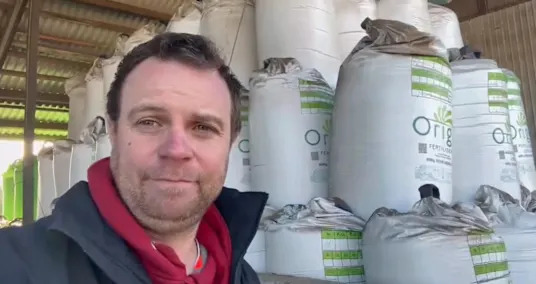
Olly Harrison, who farms in Tarbock, on Merseyside, said he bought his fertiliser for a good price last year and now believes - due to a wet and cold spring and limited growing days left, added with the costs of diesel for machinery - he may be better off not planting.
"We'd actually make more money selling it than putting it on the crop that it was intended for," he said.
"And to replace that fertiliser would cost a lot of money and I will have to buy some for next year's crops."
Olly said he bought his current supply of fertiliser last June at about £340 a tonne.
"It's upwards of £700 now.
"We've had a cold spring and a wet spring and we've still got some corn not in the ground," he said.
'At the mercy' of importing
"If you're thinking that you may be getting 100 days to grow a crop in the spring and we're probably already 30 days late, we're down to 70 days worth of growing that crop.
"So, putting fertiliser on it won't help because there's just not enough daylight hours.
"And then having the expense of diesel putting the crop in the ground, and then hoping that we're going to get the perfect weather to get a crop off it anyway... you start to think, is this worth doing?"
Olly, who is the fifth generation of his family to farm on the site, said after the closure of a fertiliser factory in nearby Wirral about three years ago he had become "completely at the mercy of imported fertiliser just to grow crops".
"Each time there is turmoil in the world, whether it's when it kicked off in Ukraine and Russia or some of the fallout from Covid with expensive machinery, it just, effects the input costs and the cost to grow food now," he said.
"It's just getting out of control."
He added: "Every year of farming, it seems like double or quits.
"We feel like we're gambling all the time and the stakes keep getting higher."
Listen to the best of BBC Radio Merseyside on Sounds and follow BBC Merseyside on Facebook, X, and Instagram. You can also send story ideas via Whatsapp to 0808 100 2230.
latest_posts


 Doritos and Cheetos debut 'NKD' options, without artificial colors or flavors
- Figure out how to Guarantee Your Dental Embeds Endure forever
- 4 Electric Vehicle Brands: Execution, Unwavering quality, and Development
- Former school bus aide pleads guilty to assaulting 3 autistic students in Colorado
- Figure out How to Augment the Advantages of a Web-based Degree
- Most loved Specially prepared Espresso Mix: Which Meal Do You Adore the Most?
- Turning to turkey’s tryptophan to boost mood? Not so fast
- Step by step instructions to Contrast Lab Jewels and Regular Ones
- Israel has clear objectives south of Litani River, but will face difficult choices further north